
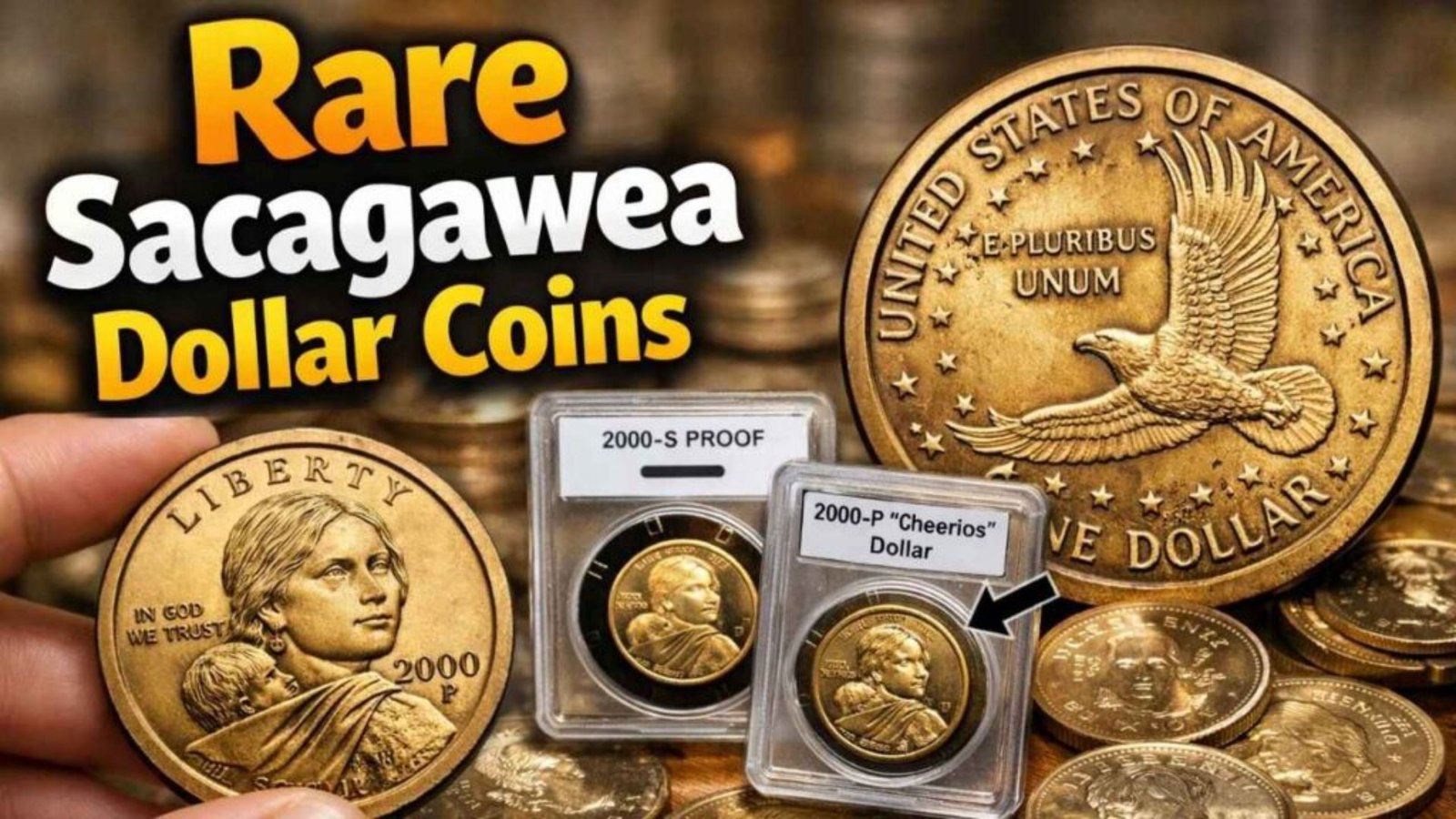
Have you ever dug through your change jar and wondered if that shiny golden dollar could be worth a fortune? The Sacagawea dollar, introduced in 2000, honors the brave Shoshone woman who guided Lewis and Clark. Most are just $1 face value, but rare errors, varieties, and special editions can fetch thousands—or even millions—in today’s hot collector market. In 2026, with renewed interest in modern U.S. coin errors, some lucky finds are changing lives. Stick around as we uncover the top rare Sacagawea dollar coins, how to spot them, and why they’re valuable now.
What Are Sacagawea Dollars?
The Sacagawea dollar is a golden-colored $1 coin made from manganese brass, featuring Sacagawea with her son on the obverse and a soaring eagle on the reverse. Since 2009, it’s continued as the Native American $1 coin series with changing reverses honoring Indigenous contributions.
History and Background
Launched in 2000 to boost dollar coin use, the U.S. Mint produced billions, but early promotions—like Cheerios boxes—created instant rarities. Errors happened during minting, especially in 2000 when new dies and processes led to standout varieties. Over time, these mistakes became prized by numismatists.
Why These Rare Coins Matter Today
In 2026, rare Sacagawea dollar coins attract hobbyists and investors alike. Rising auction prices for errors like mules and prototypes make checking pocket change exciting. With low survival rates for top examples, values climb as demand grows.
The Most Valuable Rare Sacagawea Dollars in 2026
Here are standout finds that can be worth big money—some hitting six or seven figures in exceptional cases.
- 2000-P Cheerios Dollar — Enhanced, bold tail feathers on the eagle from promotional prototypes. Values soar into the thousands for high-grade pieces.
- 2000-P Sacagawea/Washington Quarter Mule — Famous error: Sacagawea obverse paired with quarter reverse. Only about 19 known; recent sales top $100,000–$200,000+.
- 2000-P Wounded Eagle Variety — Die gouges look like wounds on the eagle’s chest. Up to $5,000 in top condition.
- 2000-P Goodacre Presentation — Special satin finish coins given to designer Glenna Goodacre. Highly sought after.
- Double Strikes or Off-Center Errors — Dramatic misstrikes from various years. Can reach hundreds to thousands.
- Missing Edge Lettering (later years) — Omitted inscriptions boost value to $50–$300+.
- Other Die Varieties — Like repunched mint marks or die cracks in 2004–2005 coins.
For a quick comparison:
| Rank | Coin/Variety | Year/Mint | Key Feature | Approx. Value Range (2026) |
|---|---|---|---|---|
| 1 | Sacagawea/Quarter Mule | 2000-P | Wrong reverse die | $50,000 – $200,000+ |
| 2 | Cheerios Prototype | 2000-P | Enhanced eagle feathers | $4,000 – $25,000+ |
| 3 | Wounded Eagle Die Gouge | 2000-P | Gouges on eagle body | $1,000 – $5,000 |
| 4 | Double Strike Errors | Various | Multiple impressions | $100 – $2,000+ |
| 5 | Off-Center Strikes | Various | Misaligned design | $200 – $1,500+ |
Another useful table of common vs. rare:
| Type | Mintage/ Rarity | Typical Value | Why Valuable? |
|---|---|---|---|
| Standard Circulation | Billions | $1 | Common, no errors |
| Proof/Special | Low | $5–$150 | High polish, collector sets |
| Major Errors (Mule) | ~19 known | Six figures | Unique mint mistake |
| Cheerios Variety | Limited promo | Thousands | Promotional early release detail |
How to Find and Identify Them
Grab a magnifying glass and check your coins under good light. Look for sharp feather details (Cheerios), extra lines/gouges (Wounded Eagle), or mismatched sides (mule). Search change, rolls from banks, or old jars—treasures still turn up!
Expert Tips for Collectors
Start small: Buy certified graded coins from PCGS or NGC for authenticity. Focus on 2000 issues first—they hold the biggest surprises. Store coins safely to preserve value, and join forums to learn from others. Always verify with experts before selling.
Frequently Asked Questions (FAQs)
Q: Are all Sacagawea dollars worth more than $1?
No—only rare errors or varieties command premiums.
Q: What’s the most expensive Sacagawea dollar ever sold?
Mule errors and extreme rarities have hit six figures, with some reports of over $200,000.
Q: How can I tell if my coin is a Cheerios variety?
Check for extra-detailed, crisp eagle tail feathers compared to regular coins.
Q: Should I clean rare coins?
Never—cleaning reduces value. Leave them as-is.
Q: Where can I sell a valuable Sacagawea dollar?
Auction houses, reputable dealers, or platforms like eBay with certification.
Conclusion
Rare Sacagawea dollar coins prove that everyday pocket change can hide incredible value—especially in 2026’s thriving market for modern errors. From the legendary Cheerios variety to ultra-rare mules, these 13 finds remind us why coin collecting stays exciting. Grab your magnifying glass, check your stash, and who knows? Your next dollar could be a life-changer. Share your finds in the comments, hunt for more, or explore other U.S. coin rarities today!