
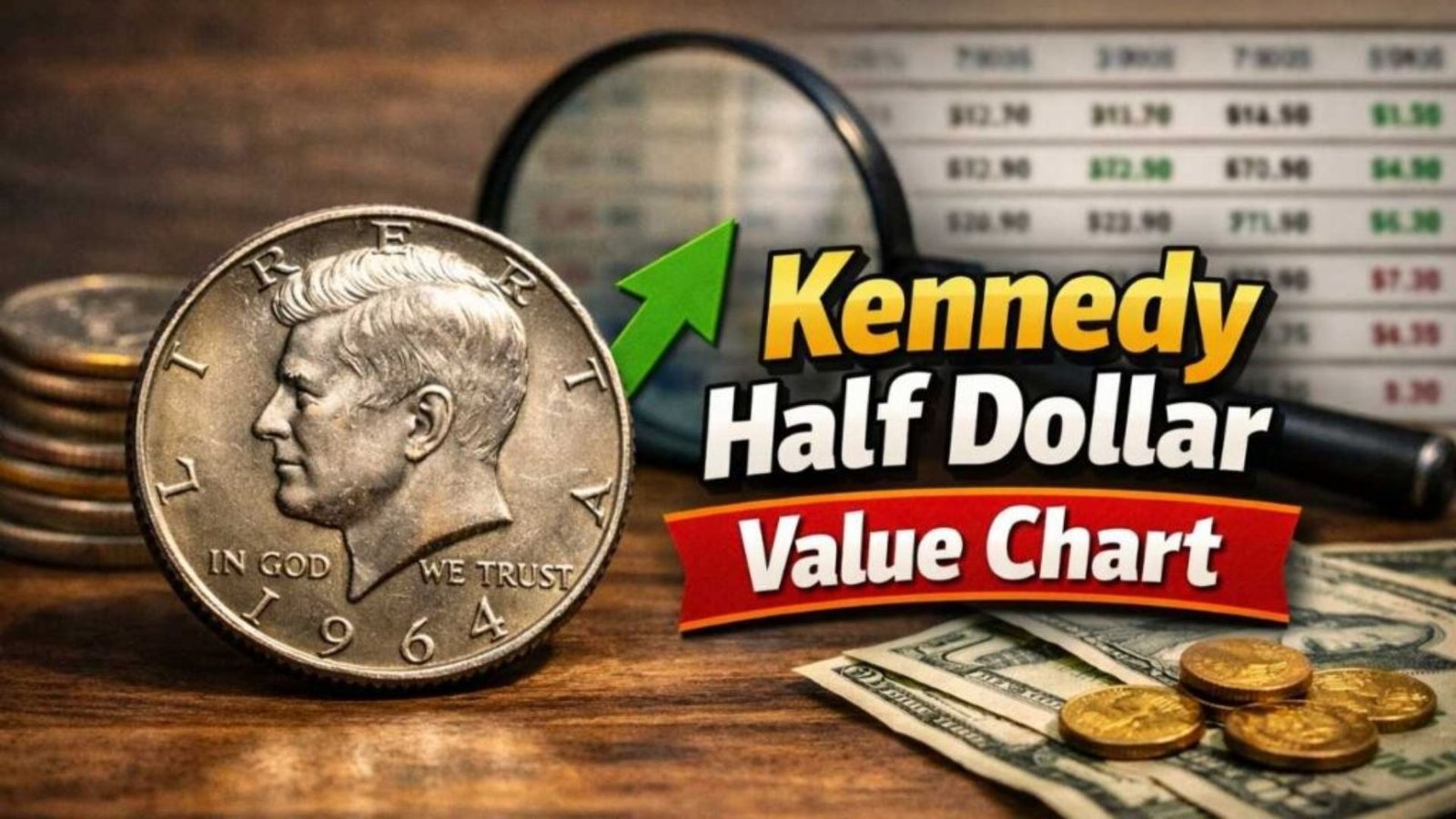
Have you ever dug through your change jar or an old coin collection and spotted a Kennedy Half Dollar? That familiar profile of President John F. Kennedy might be worth way more than 50 cents—especially certain years with silver content or low mintages.
In 2026, with silver prices strong and collector interest rising, these coins remain a favorite among hobbyists. Stick around as we break down current values, key mint marks, rare dates, and tips to spot treasures in your pocket change or at estate sales.
What Is the Kennedy Half Dollar?
The Kennedy Half Dollar is a 50-cent coin featuring President John F. Kennedy on the obverse and the presidential seal on the reverse. Introduced shortly after his assassination, it’s been minted since 1964 and remains a circulating coin today—though you rarely see them in everyday change.
A Brief History of the Kennedy Half Dollar
Congress rushed the design in late 1963 to honor JFK. The first coins hit in 1964 with 90% silver composition. Due to silver shortages, it switched to 40% silver from 1965–1970, then copper-nickel clad from 1971 onward. Mint marks (P, D, S) indicate production location: Philadelphia (no mark or P), Denver (D), San Francisco (S, often proofs).
Why Kennedy Half Dollars Are Valuable in 2026
Silver content drives base value for pre-1971 coins, while rarity, condition, and errors boost prices for collectors. In 2026, silver melt values keep older pieces above face, and low-mintage years like 1970-D attract bids. Hobbyists love the historical tie to JFK and the series’ accessibility.
Understanding Mint Marks and Composition
- Mint Marks: Look below Kennedy’s bust—P (Philadelphia), D (Denver), S (San Francisco). No mark often means Philadelphia pre-1980.
- Composition Changes:
- 1964: 90% silver (highest intrinsic value).
- 1965–1970: 40% silver clad.
- 1971+: Copper-nickel (mostly face value unless rare).
Kennedy Half Dollar Value Chart 2026
Values depend on condition (circulated vs. uncirculated/MS grades) and fluctuate with silver spot prices. Here’s a general 2026 overview:
| Year Range | Composition | Mint Mark Examples | Circulated Value (USD) | Uncirculated/MS-65+ Value (USD) |
|---|---|---|---|---|
| 1964 | 90% Silver | (none), D | $10–$20 | $30–$100+ (higher for proofs) |
| 1965–1970 | 40% Silver Clad | Various | $4–$8 | $15–$50+ |
| 1971–Present | Copper-Nickel | P, D, S | $0.50–$2 | $3–$25 (proofs higher) |
| Key Low Mintage | e.g., 1970-D | D | $10–$50 | $100–$1,000+ |
(Note: Proofs and errors can reach thousands.)
Key Dates and Rare Varieties
Watch for these standouts in 2026:
- 1964 (90% silver): First-year issue, massive appeal.
- 1970-D: Lowest business-strike mintage, only in mint sets.
- Accented Hair 1964 Proofs or doubled dies: Error varieties fetch premiums.
- Modern low-mintage or special finishes (e.g., 1987 P/D mint set only).
High-grade gems or errors from any year can surprise—some sell for hundreds or more.
Collector’s Tips: How to Get Started or Maximize Value
Start simple: Check pocket change or rolls for silver-content coins (pre-1971). Use a loupe for mint marks and errors. Grade condition carefully—MS-65+ boosts value dramatically. Store in holders to preserve them. Sell via auctions or dealers for best prices. Join forums to learn from fellow collectors.
Frequently Asked Questions (FAQs)
Are any 2026 Kennedy Half Dollars valuable yet?
Most are face value unless errors or high-grade proofs emerge over time.
How do I know if my Kennedy Half is silver?
1964 = 90% silver; 1965–1970 = 40% silver. Weigh or use a magnet (silver isn’t magnetic).
What’s the most valuable Kennedy Half Dollar?
Rare 1964 varieties or errors top lists, with some reaching thousands in top condition.
Should I clean my coins?
No—cleaning often lowers value. Leave them as-is.
Conclusion
The Kennedy Half Dollar blends history, silver value, and collector excitement like few other coins. Whether you’re hunting for a 1964 silver piece worth $10+ or dreaming of a rare 1970-D find, this series offers something for every budget. Grab a magnifying glass, check your stash, and who knows—you might uncover a small fortune. Share your finds in the comments or explore more rare coin guides. Happy hunting!