
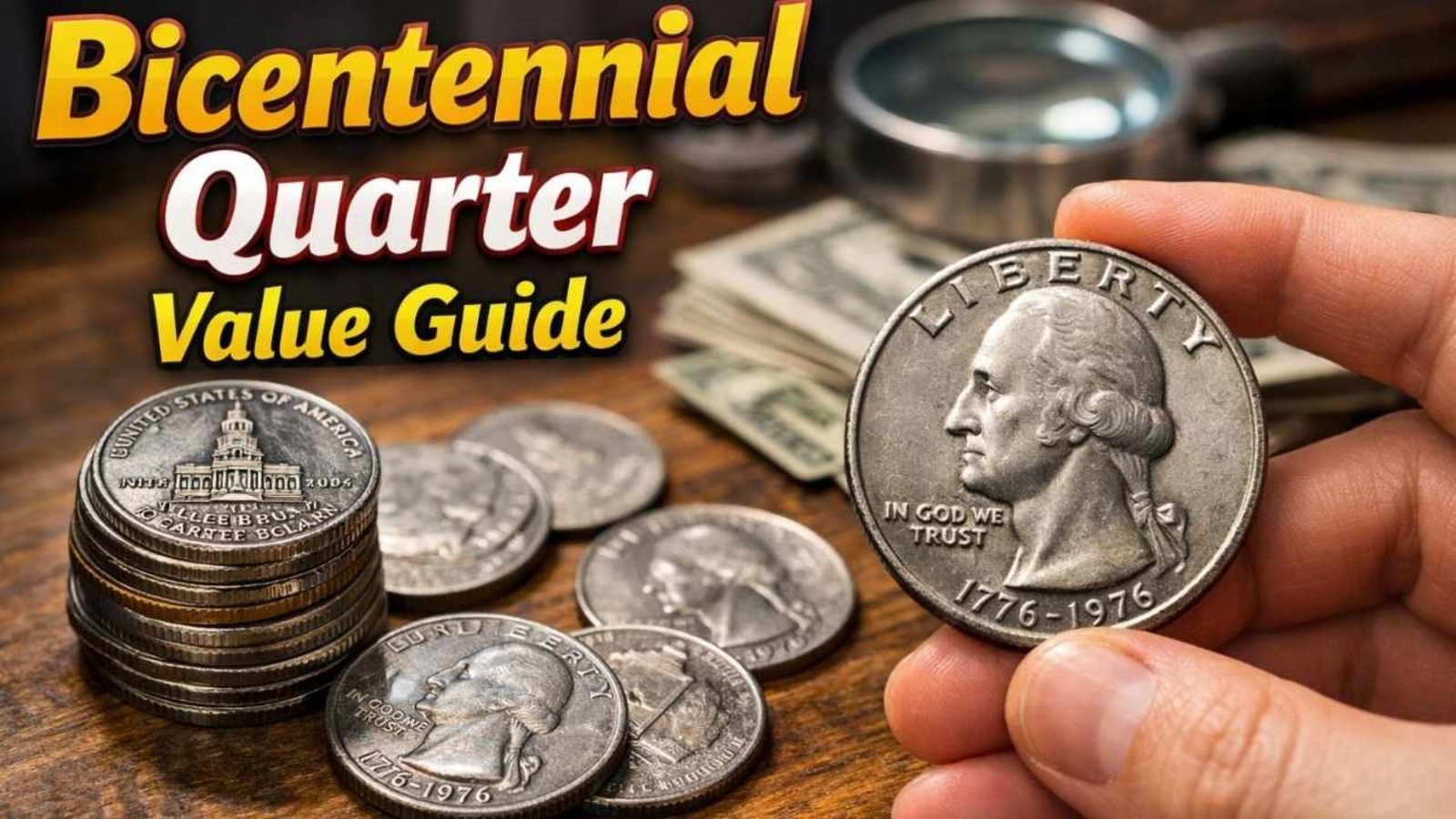
Ever dug through your change jar and spotted a quarter with the dates 1776–1976 and a colonial drummer on the back? You’re not alone. These Bicentennial quarters, released to celebrate America’s 200th birthday, are more than just old pocket change. Many hobbyists wonder if their 1776-1976 coins could be worth a small fortune—especially rare versions or those with errors. Stick around as we break down their history, what makes some truly valuable, current values, and tips to check yours. You might have a hidden gem!
What Is the Bicentennial Quarter?
The Bicentennial Quarter is a special edition of the Washington quarter minted in 1975 and 1976. It features George Washington on the front (obverse) with the dual date 1776–1976, and a unique reverse showing a colonial drummer boy. This design honors the American Revolution’s bicentennial.
Most are copper-nickel clad (like regular quarters), but some are 40% silver for collectors. Billions were made, so common circulated ones stay at face value—but don’t stop reading yet; rarity comes from condition, mint marks, and errors.
History and Background of the 1776-1976 Quarter
In 1973, Congress approved special commemorative coins for the nation’s 200th anniversary. The quarter, half dollar, and dollar got new reverses. Jack L. Ahr’s winning design for the quarter depicts a drummer in colonial attire, symbolizing the fight for independence.
Production started in 1975 (all dated 1776–1976) at Philadelphia (no mint mark), Denver (D), and San Francisco (S for proofs and silver). Over 1.6 billion quarters were struck, flooding circulation by 1976. Silver versions went to collectors via sets.
Why These Coins Matter Today for Collectors and Investors
These quarters blend history, patriotism, and numismatic appeal. With silver versions containing precious metal, they offer melt value plus collector premium. High-grade or error examples appreciate well—some fetch thousands at auction. For hobbyists, they’re an accessible entry into rare coin collecting, and investors eye them for potential growth in the coin market.
Bicentennial Quarter Values: How Much Is Yours Worth?
Values vary by mint mark, composition, condition (graded MS for uncirculated, or circulated), and rarity.
Common Bicentennial Quarter Values Table
| Type/Variety | Mint Mark | Condition | Approximate Value (Recent Estimates) |
|---|---|---|---|
| Standard Clad | P or D | Circulated | $0.25 – $1 |
| Standard Clad | P or D | Uncirculated/MS65+ | $3 – $15 |
| Silver (40%) | S | Uncirculated | $8 – $20 |
| Silver Proof | S | Proof/MS68+ | $10 – $500+ |
| High-Grade Silver | S | MS69 Gem | $3,000 – $19,200+ |
Circulated clad examples rarely exceed face value, but pristine silver proofs or top MS grades soar.
Notable Auction Records Table
| Coin Description | Sale Price | Year/Notes |
|---|---|---|
| 1976-S Silver MS69 | $19,200 | High-grade record |
| 1976-S Silver Proof | $13,500 | 2019 auction |
| 1976-D Clad DDO (Doubled Die) | $8,400 | 2023 |
| Double Denomination (on Dime) | $9,200 | 2020 rare error |
| 1976-D Clad MS68 | $5,170 | Exceptional strike |
Rare Errors and Varieties to Hunt For
Minting mistakes make ordinary coins extraordinary. Look for:
- Doubled Die Obverse (DDO): Doubling on “LIBERTY” or date—values $200–$5,000+.
- Off-Center Strikes: Misaligned design—$25–$300+.
- Clipped Planchet or Broadstrike: $15–$250+.
- Wrong Planchet (e.g., struck on dime): Up to thousands.
These errors are scarce and drive big premiums.
Expert Tips for Collecting and Valuing Bicentennial Quarters
- Check the mint mark (under Washington’s neck): S for silver/proof, D for Denver, none for Philadelphia.
- Examine condition: No wear = higher value. Use a magnifier for errors.
- Get graded by PCGS or NGC for serious pieces.
- Store in holders to preserve value.
- Buy from reputable dealers or auctions—avoid hype claiming millions (most are exaggerated).
Start small: Hunt in change or buy sets affordably.
Frequently Asked Questions (FAQs)
Are all 1776-1976 quarters valuable?
No—most circulated clad ones are worth 25 cents. Silver or high-grade/error versions shine.
What’s the rarest Bicentennial quarter?
Top-grade 1976-S silver MS69 or major errors like wrong planchet strikes.
Do silver Bicentennial quarters have melt value?
Yes, about $8–$12 in silver, plus collector premium.
How to spot a doubled die?
Look for clear doubling on letters/date with a loupe.
Final Thoughts: Start Your Search Today
The Bicentennial Quarter captures a proud moment in American history while offering real potential for collectors and investors. Whether it’s a common piece with sentimental value or a rare error worth thousands, these 1776-1976 coins remind us treasures can hide in plain sight. Grab a magnifying glass, check your jars or pockets, and who knows—you might uncover something special. Share your finds in the comments, or explore more rare coin guides. Happy hunting!