
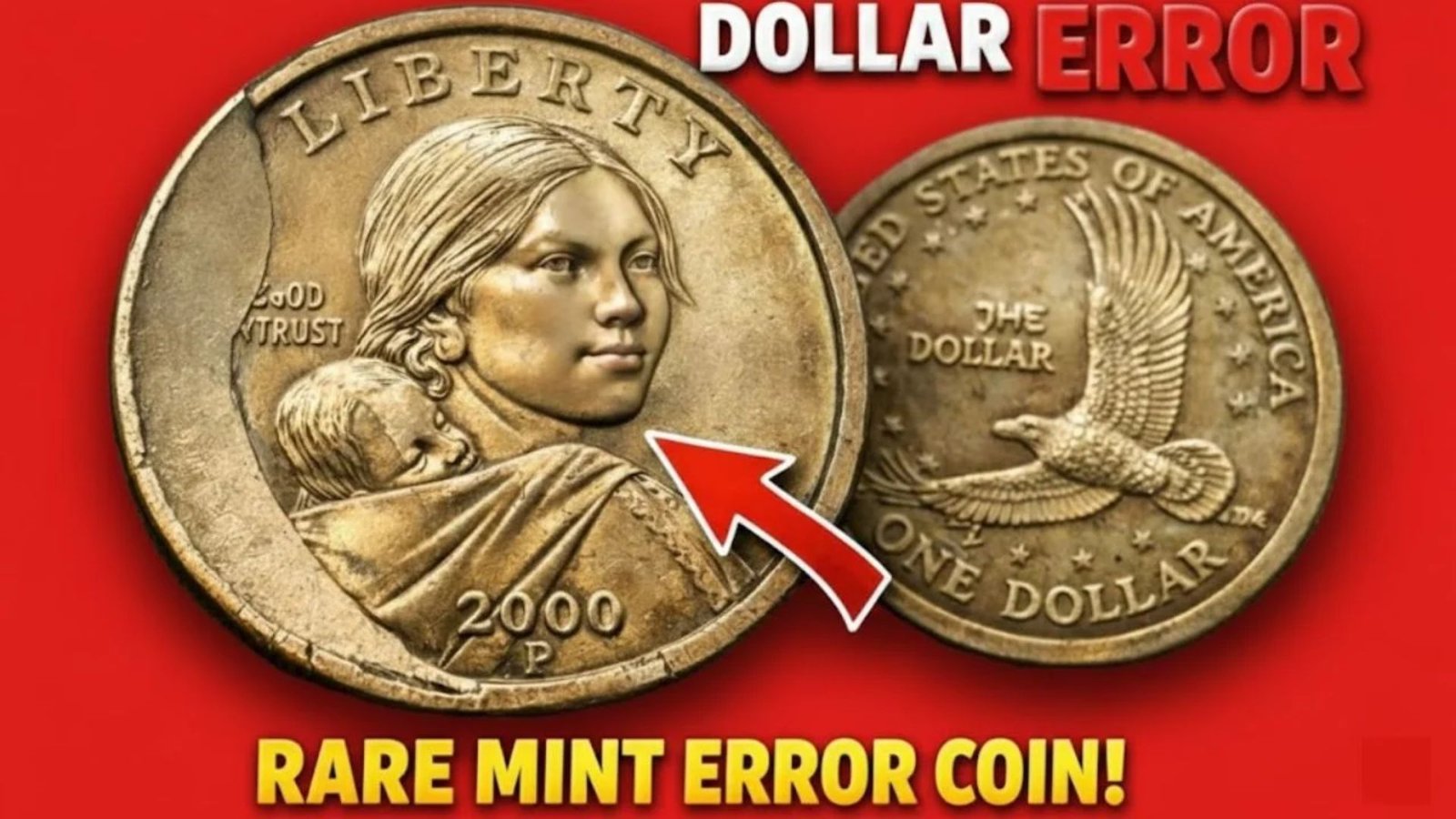
Have you ever held a regular-looking $1 coin and wondered if it could secretly be worth a fortune? The 2000 Sacagawea dollar errors have turned ordinary pocket change into numismatic gold. One dramatic mule error has fetched prices in the hundreds of thousands—sparking talk of modern rarities rivaling classics. Stick around as we dive deep into this fascinating story. You might just spot one in your collection!
What Is the 2000 Sacagawea Dollar Error?
The Sacagawea dollar, introduced in 2000, honors the Shoshone woman who guided Lewis and Clark. Its golden color and innovative design aimed to revive dollar coin use. But minting mishaps created rare errors that hobbyists hunt today. These include die mismatches, gouges, and wrong planchets—turning $1 face value into thousands.
History and Origin of the Sacagawea Dollar
Launched January 27, 2000, after massive hype, over a billion Sacagawea dollars were minted in the first years. The 2000-P and 2000-D versions flooded circulation. Yet errors slipped through, like prototype dies in Cheerios promotions or mismatched dies from quarter production.
The Most Famous Error: The Mule That Shocks Collectors
The star is the 2000-P Sacagawea/Washington Quarter mule. It pairs Sacagawea’s obverse with a quarter’s reverse (or vice versa in variants). Only about 15-20 exist. This “mule” error—wrong dies combined—has sold for up to $250,000 or more at auction. It’s not literally $1 billion, but its rarity redefines modern coin value.
Why These Errors Are Valuable Today
Modern rarities like these prove errors aren’t just old coins. Low survival rates, collector demand, and auction records drive prices. They show even recent U.S. Mint issues can yield treasures—changing how we view “modern” collecting.
Notable Sacagawea Dollar Errors and Values Comparison
| Error Type | Year/Mint | Known Examples | Approximate Value Range | Key Feature |
|---|---|---|---|---|
| Washington Quarter Mule | 2000-P | ~15-20 | $80,000 – $250,000+ | Mismatched dies (Sac obverse + quarter reverse) |
| Cheerios Enhanced Tail Feathers | 2000-P | ~5,500 | $2,000 – $25,000+ | Prototype reverse details |
| Wounded Eagle (Die Gouge) | 2000-P | Few hundred | $250 – $5,000+ | Raised lines on eagle’s chest |
| Struck on SBA Planchet | 2000-P | Rare | Up to $15,000 | Wrong metal blank |
| Off-Center or Double Strike | 2000 | Varies | $500 – $5,000+ | Misaligned strike |
These figures come from recent auctions and grading services like PCGS.
How Readers Can Engage and Benefit
Grab a magnifying glass and check spare change or old jars. Look for odd mismatches or lines on the eagle. Join forums, attend coin shows, or submit to graders like PCGS/ NGC. Collecting errors builds knowledge—and potentially profit. Start small; one find could fund your hobby!
Expert Tips for Spotting Rarities
Use good lighting and a loupe. Compare your coin to standard images online. Focus on the eagle’s feathers, edges, and obverse/reverse match. Avoid cleaning— it hurts value. Authenticate big finds professionally.
Frequently Asked Questions (FAQs)
Is every 2000 Sacagawea dollar valuable?
No—most are worth $1-5 unless error or high-grade special.
What’s the rarest 2000 Sacagawea error?
The quarter mule leads, with six-figure sales.
Where can I sell a rare Sacagawea error?
Auctions like Heritage, GreatCollections, or dealers via eBay/PCGS.
Are there other valuable Sacagawea errors?
Yes—2007 mules and later varieties also fetch big bucks.
The 2000 Sacagawea dollar errors remind us treasures hide in everyday coins. From mule mishaps to die flaws, they prove modern rarities can rival any classic. Check your pockets—you might hold history. Share your finds below, hunt more errors, or explore related Native American dollar varieties. Happy collecting!